Architectural Group Housing Jury
Third year architecture students present climate responsive housing concepts and planning strategies
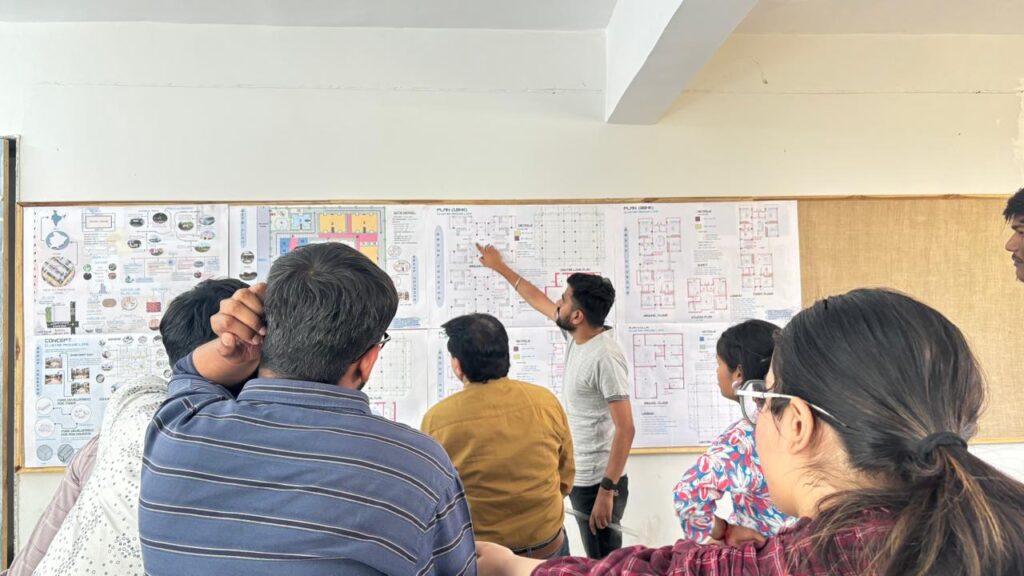
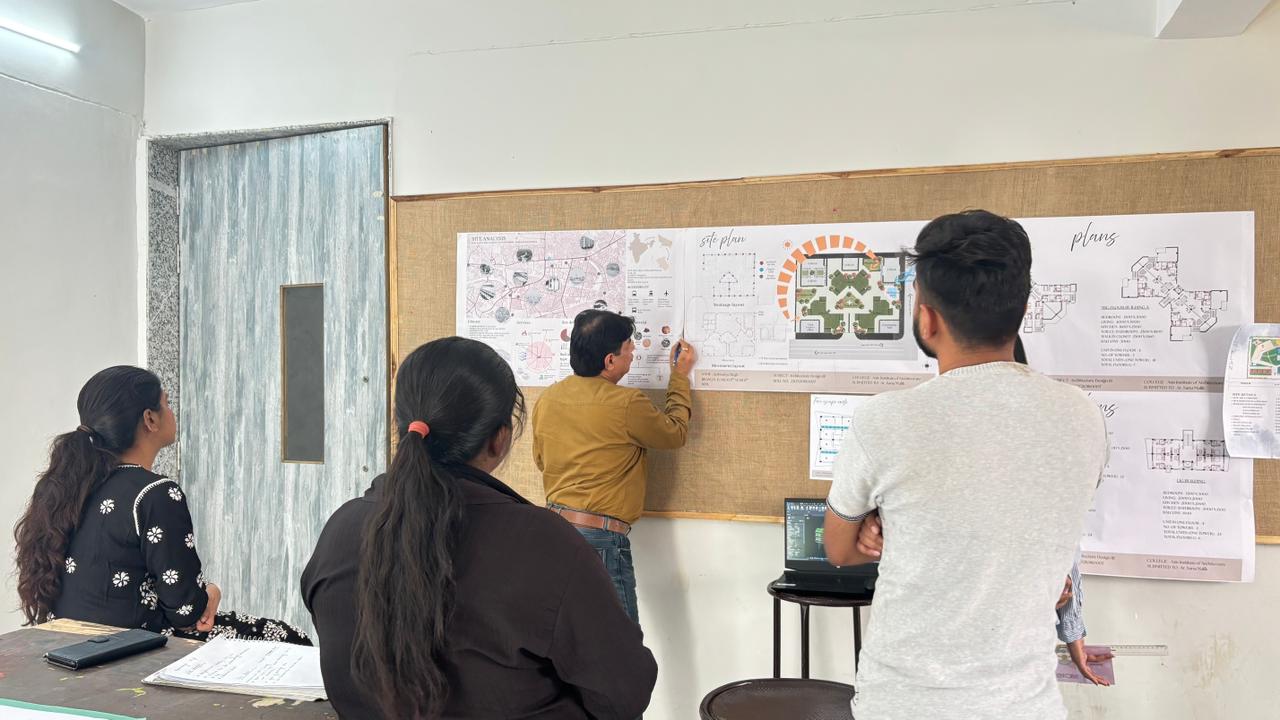
Axis Institute of Architecture once again demonstrated its commitment to experiential learning as the third-year Bachelor of Architecture students showcased their group housing schemes in a comprehensive stage jury. The projects, developed on a site located in Lucknow, reflected a deep understanding of contextual design, environmental responsiveness, and user-centric planning.
The students presented their concepts, detailed floor plans, and area analysis with a strong emphasis on climate-responsive architecture. Each proposal thoughtfully responded to site conditions such as slope, orientation, and local climatic factors, highlighting the students’ ability to integrate theoretical knowledge with practical design solutions. From zoning strategies to circulation patterns and spatial hierarchy, the projects exhibited a mature approach towards sustainable and functional housing design.
The jury was conducted by an esteemed internal panel and was headed by the Director, Dr. Rishi Raj Kapoor, along with all faculty members. Their insightful observations and constructive feedback provided students with valuable direction for refining their designs. The interactive nature of the session encouraged students to articulate their ideas confidently while also learning from peer presentations and expert critiques.
What made the session particularly impactful was the collaborative learning environment, where students not only presented their work but also engaged in discussions on improving planning efficiency, optimizing space utilization, and enhancing design innovation. The faculty guided them on how minor design interventions could significantly elevate the overall quality of the housing schemes.
This stage jury served as a crucial milestone in the academic journey of the students, enabling them to critically evaluate their work and align it with real-world architectural practices. At Axis Institute of Architecture, such hands-on learning experiences continue to nurture future architects who are not only creative thinkers but also responsible designers equipped to address contemporary urban challenges.