
Artisan Visit to “Jalaluddin Bone Carving
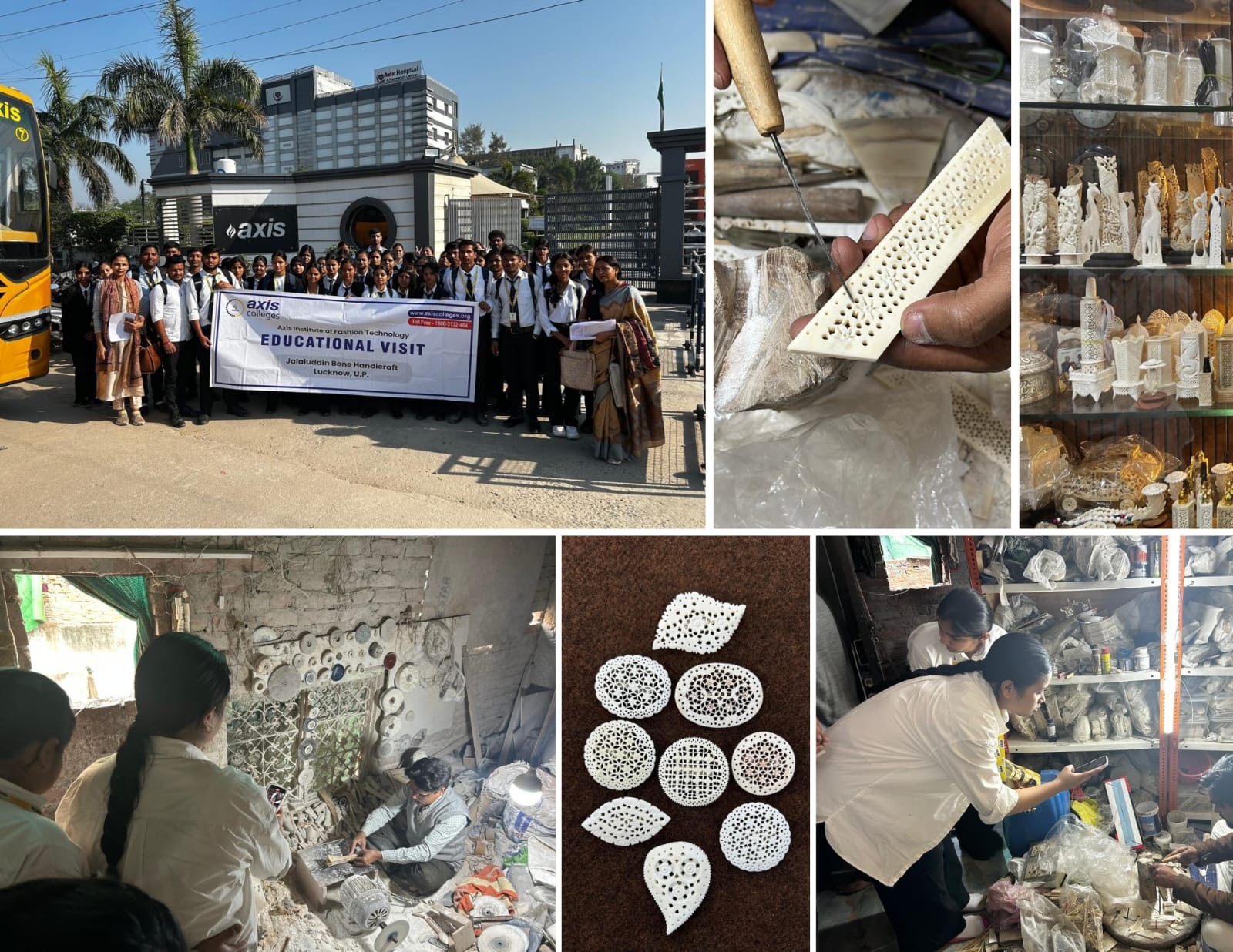
Axis Institute of Fashion Technology organized an artisan visit on February 18, 2026, for Fashion and Textile Design students to Jalaluddin Bone Carving Workshop in Lucknow. The purpose of this visit was to give students a real life understanding of traditional Indian crafts and connect their classroom learning with practical knowledge.
During the visit, students had the opportunity to interact with Mr. Jalaluddin, a National Award winning master artisan, along with his team of skilled craftsmen. He explained the history of bone carving and shared that this traditional craft has been practiced in India for many centuries. Students learned how discarded animal bones are carefully collected and then cleaned, boiled, and dried before the carving process begins.
This method makes the craft sustainable because it uses waste materials in a creative and meaningful way.
Students closely observed how artisans transform simple bones into beautiful products such as ornaments, jewellery, and decorative home items. They watched different techniques used in the craft, including jali work for creating delicate patterns, engraving for detailed designs, and inlay work for adding decorative elements. The artisans demonstrated how they use special hand tools like chisels, files, drills, and polishing tools to shape and finish each piece with great precision and patience.
One of the most interesting parts of the visit was seeing how jewellery pieces are created. Students saw raw bones being turned into elegant items such as necklaces, earrings, pendants, and decorative accessories. The detailed work and creativity involved in the process impressed the students and helped them understand the value of traditional craftsmanship.
This visit helped students develop a deeper appreciation for India’s rich craft heritage. It also encouraged them to think about how traditional techniques can be combined with modern fashion and sustainable design practices. The experience inspired students to respect and preserve traditional crafts while exploring new creative possibilities in the fashion and textile industry.