
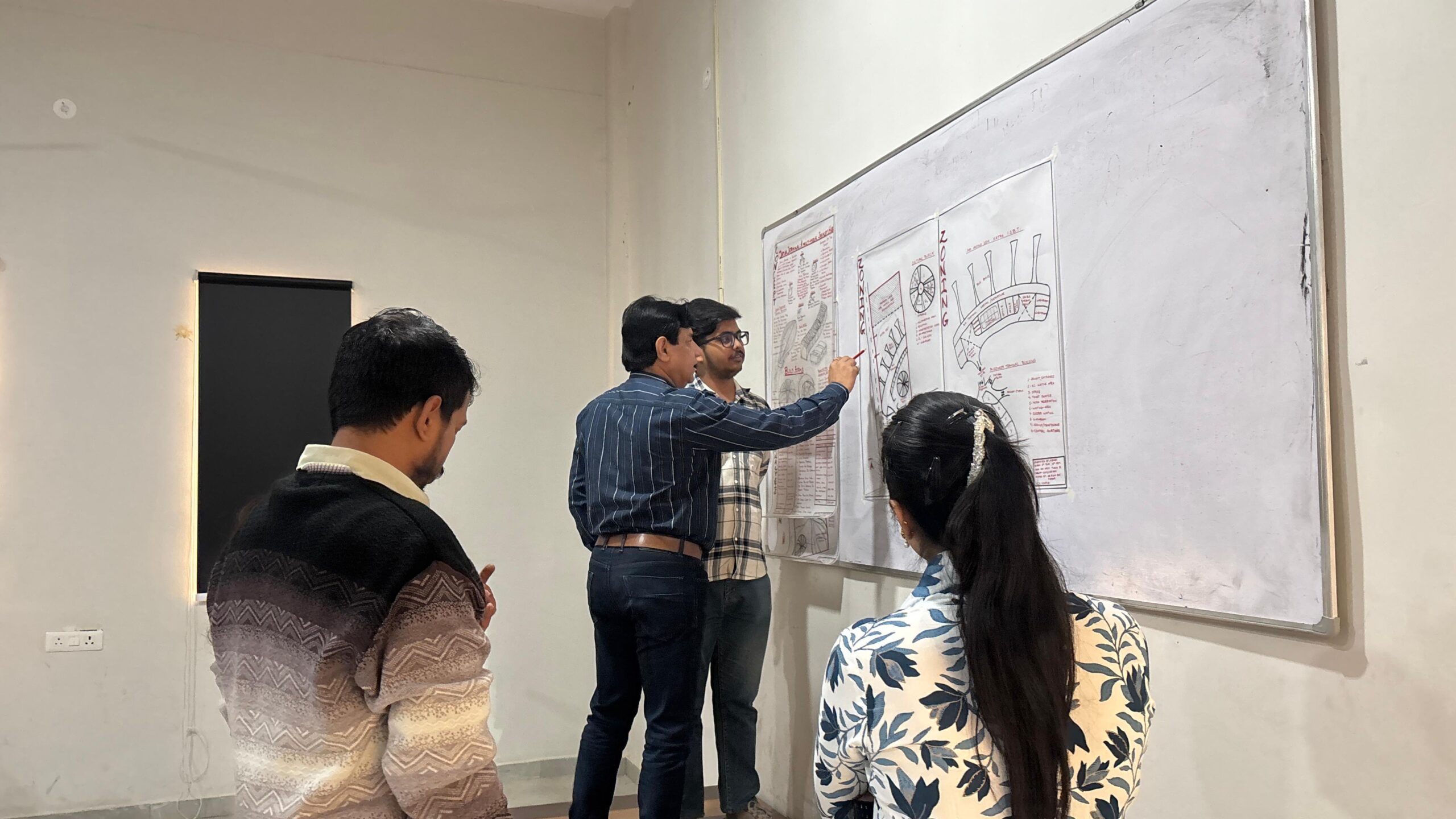
The students of the Bachelor of Architecture, Fifth Year, at Axis Institute of Architecture recently conducted their Base Jury for the Thesis Studio, marking a significant milestone in their academic journey. The session focused on the presentation of zoning sheets, where students demonstrated their understanding of site planning, spatial organization, and design strategies for their respective thesis projects.
During the jury, each student presented a detailed zoning proposal explaining how they intend to implement their design strategies on the given site. The presentations highlighted thoughtful analysis of site context, access and circulation patterns, functional segregation, climate responsiveness, and user movement. Through diagrams, bubble layouts, and conceptual sketches, students showcased how different zones—public, semi-public, private, service, and green areas—were strategically planned to ensure efficiency, sustainability, and experiential quality.
The jury panel carefully evaluated how effectively students translated their conceptual ideas into practical spatial arrangements. Emphasis was placed on logical planning, hierarchy of spaces, connectivity, environmental considerations, and integration of built and open spaces. Students were encouraged to justify their zoning decisions based on research, case studies, and site analysis conducted during earlier stages of the thesis process.
The session was conducted in the presence of the Director of Architecture, Dr. Rishi Raj Kapoor, along with internal faculty members of the department. The panel actively engaged with students through critical discussions, raising questions about design feasibility, circulation clarity, structural possibilities, and contextual relevance. Constructive feedback was provided to help students refine their planning approach before moving forward to detailed design development.
The Base Jury served as an important platform for learning, reflection, and improvement. It allowed students to articulate their vision confidently while receiving expert guidance from experienced academicians. The interactive environment encouraged critical thinking and strengthened their ability to defend design decisions with clarity and logic.
Such academic exercises not only enhance students’ presentation skills but also deepen their understanding of architectural planning at an advanced level. The Fifth-Year Thesis Jury reflects the institute’s commitment to nurturing competent, analytical, and innovative future architects ready to address real-world challenges with thoughtful design solutions.