
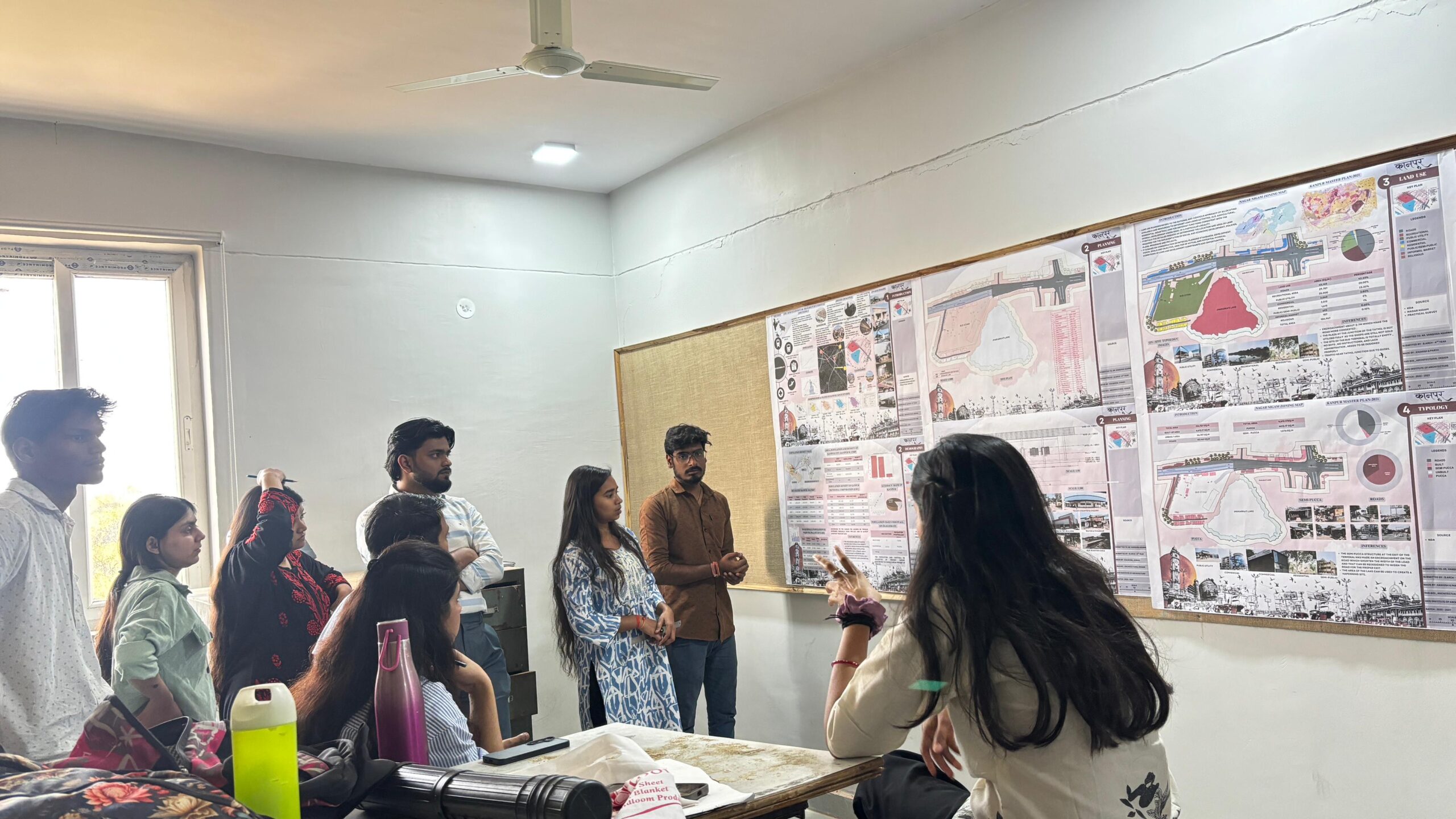
B.Arch Students Present there Urban Analysis Jury
Internal Jury Showcases Comprehensive Site Study and Planning Insights by Architecture Students
The 4th year students of the Bachelor of Architecture program recently conducted an insightful internal jury, presenting their detailed urban design analysis of the Jakkarkati to Tatmill belt, covering an approximate stretch of 1.8 kilometers. This exercise marked a significant stage in their academic journey, focusing on understanding real-time urban challenges through practical exposure and analytical thinking.
The selected stretch, a vital urban corridor in Kanpur, was studied extensively by the students through multiple approaches. The jury highlighted how each student engaged deeply with the site by conducting physical visits, on-ground measurements, and observational studies. These primary investigations were further supported by secondary research, including internet-based case studies, surveys, government bylaws, and census data analysis.
The presentations showcased a wide range of parameters essential to urban design. Students carefully mapped land use patterns, identifying residential, commercial, and mixed-use zones along the belt. They also analyzed traffic movement, pedestrian behavior, and infrastructure conditions, providing a holistic understanding of the area’s functionality. Special emphasis was given to environmental aspects such as water management systems, drainage conditions, and green cover, reflecting a growing awareness of sustainable urban practices.
In addition to technical mapping, students assessed socio-economic conditions by studying population density, local activities, and user behavior. This helped them derive meaningful insights into how urban spaces are utilized and where improvements are necessary. Their work reflected a balance between quantitative data and qualitative observations, forming a strong base for future design interventions.
The internal jury served as a platform for constructive feedback and academic growth. Faculty members and jury panelists provided critical remarks, guiding students to refine their analysis, correct discrepancies, and deepen their understanding of urban planning principles. The interactive discussions encouraged students to question assumptions, validate their findings, and think more critically about real-world applications.
This exercise not only strengthened the students’ research and analytical skills but also prepared them for the next stages of their design projects. By bridging theoretical knowledge with practical exposure, the jury emphasized the importance of context-driven design and responsible urban planning.
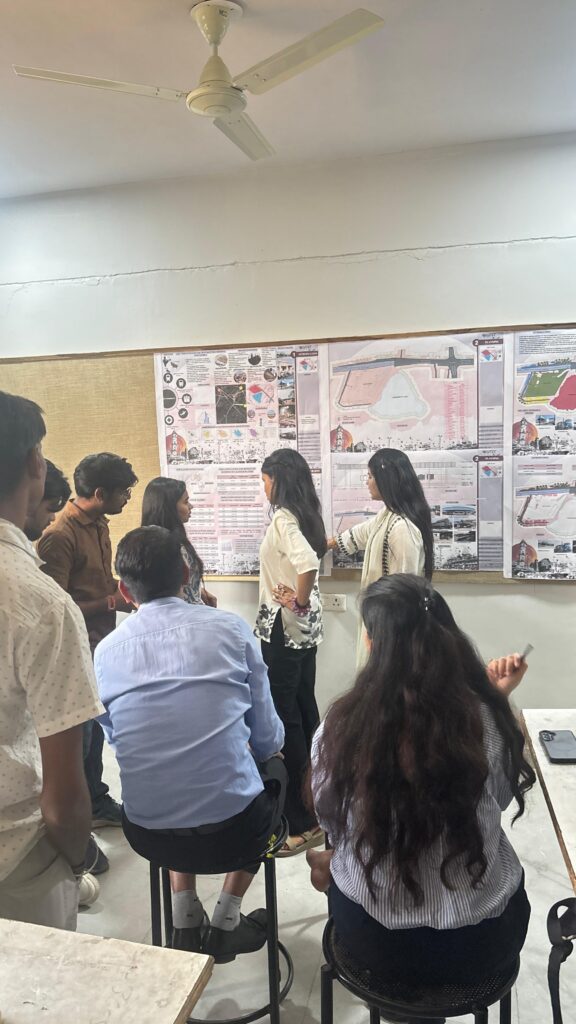
Overall, the session was a valuable learning experience, fostering a deeper connection between students and the urban fabric they aim to shape as future architects.