Construction Class of Arches in B.Arch
Insightful and comprehensive session on construction of Arches.
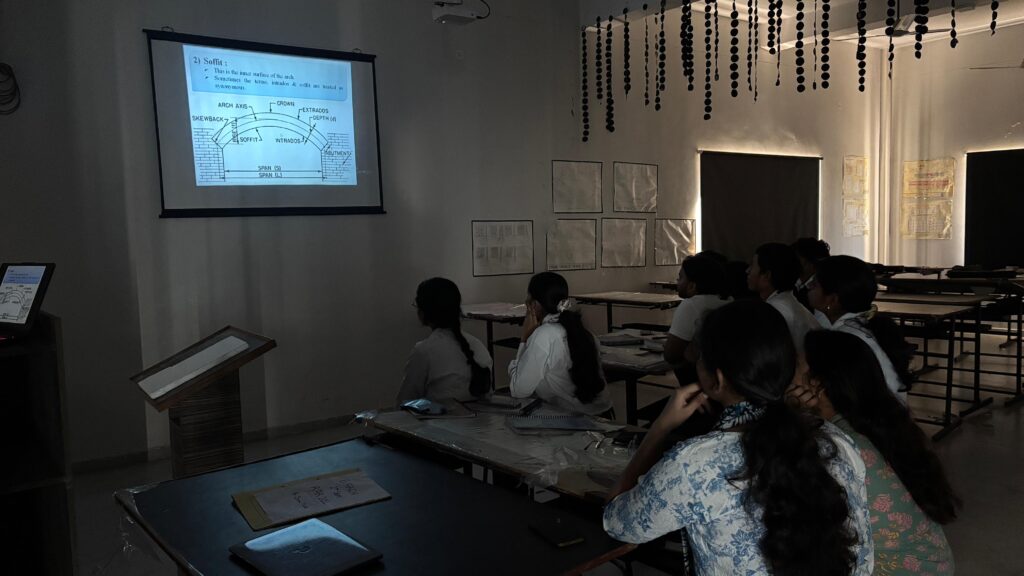
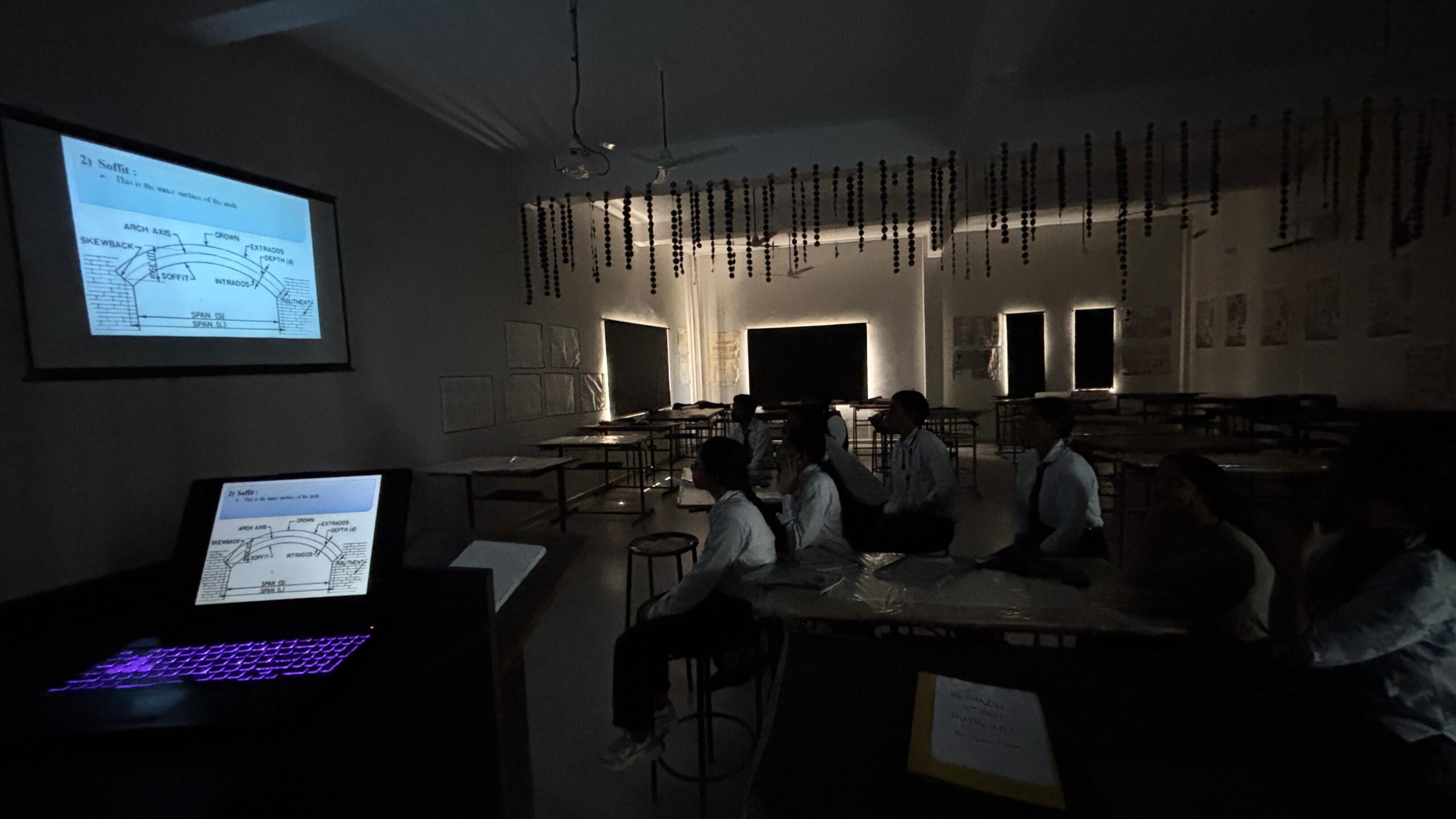
The students of Bachelor of Architecture, First Year, recently attended an insightful and comprehensive session on the topic of arches as part of their Construction and Materials subject. The class aimed to introduce young architecture students to the fundamental concepts, history, structural behavior, and construction techniques of arches—one of the most significant elements in architectural design.
The session began with an introduction to the basic definition and purpose of an arch in architecture. Students were familiarized with the essential nomenclature of arches, including components such as the abutment, pier, springing line, voussoirs, keystone, intrados, extrados, crown, and haunch. The faculty explained how each element plays a vital role in transferring loads and ensuring structural stability.
Further, the class explored various types of arches that have evolved across different architectural periods and cultures. Students were introduced to the semicircular arch, segmental arch, pointed arch, horseshoe arch, flat arch, and elliptical arch. Through diagrams, sketches, and real-life examples, they were able to understand how the shape of an arch influences both its structural performance and aesthetic appeal. The discussion also touched upon how arches were prominently used in historical architecture such as in Roman structures and Gothic cathedrals, highlighting their timeless relevance.
A detailed explanation of the construction process followed, where students learned about the step-by-step procedure of building a masonry arch. The faculty elaborated on the importance of centering and formwork, the placement of voussoirs, and the positioning of the keystone as the final locking element. The role of materials such as stone, brick, and concrete was also discussed, along with the importance of precision and craftsmanship in achieving structural balance.
The session was conducted in an interactive manner, encouraging students to ask questions and visualize the structural logic behind arches. Conceptual sketches and practical construction insights helped them connect theoretical knowledge with real-world applications.
The Construction and Materials faculty guided the students with clarity and depth, giving them a strong foundational understanding and a broader vision of how arches are designed and constructed. The class not only strengthened their technical knowledge but also inspired them to appreciate the beauty and engineering intelligence embedded within architectural forms.