B.Arch Students Case Study Visit to Ratan Orbit, Kanpur
The students of Bachelor of Architecture, Third Year, undertook an academic case study visit to Ratan Orbit, Kanpur, as part of their ongoing design studio focused on Group Housing. The visit marked an important step in bridging classroom learning with real-time site exposure and practical understanding of large-scale residential developments.
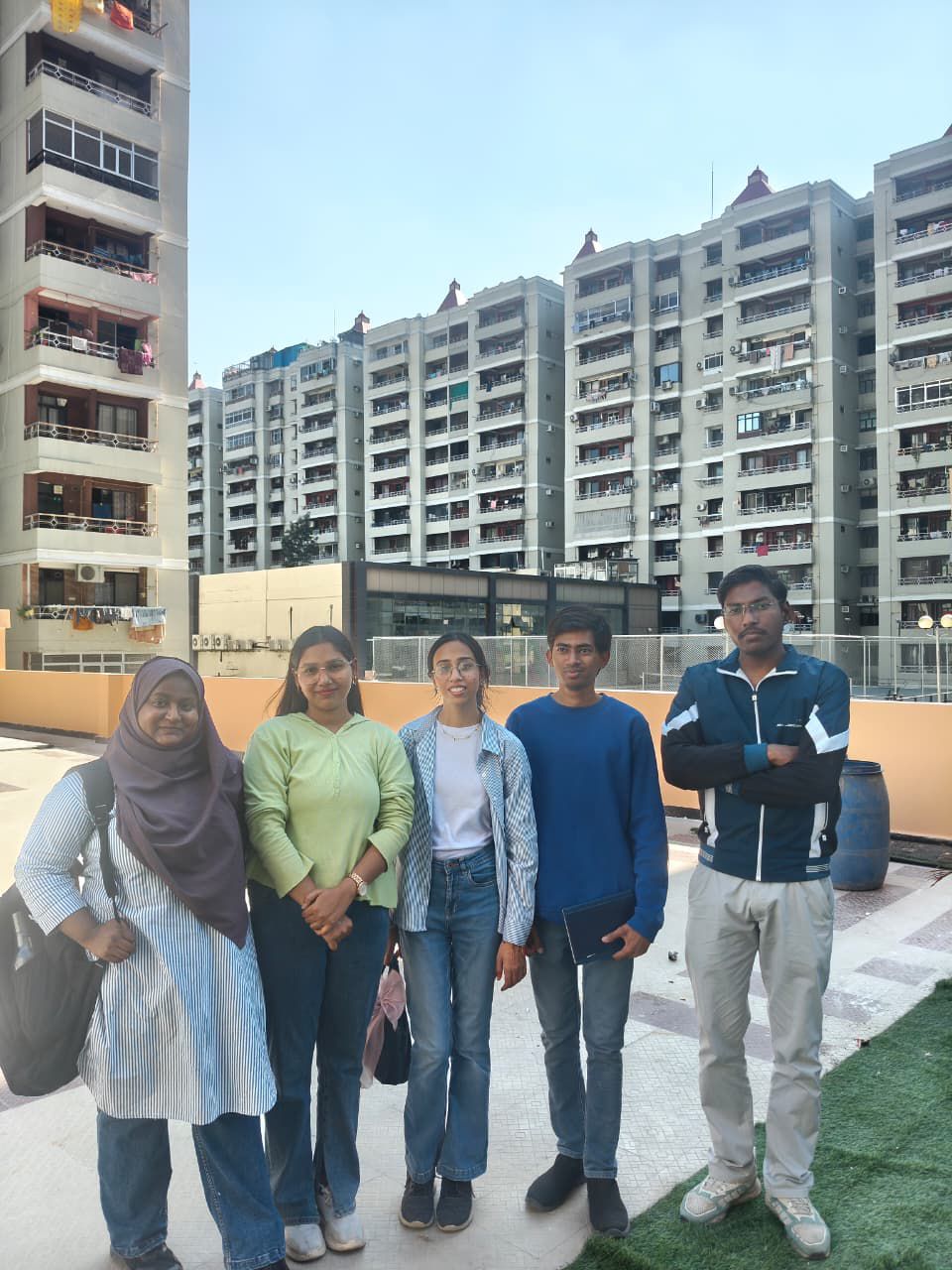
The current design problem assigned to the third-year students revolves around planning and designing a comprehensive group housing scheme. To gain deeper insights into the spatial organization, services integration, and functional aspects of such developments, Group One of the batch visited Ratan Orbit for an on-site study and analysis.
During the visit, students carefully examined the overall planning of the housing complex, including block configurations, circulation patterns, open spaces, parking provisions, and community areas. Special emphasis was laid on understanding service cores, vertical circulation systems, water supply mechanisms, fire safety measures, and waste management strategies incorporated within the project.
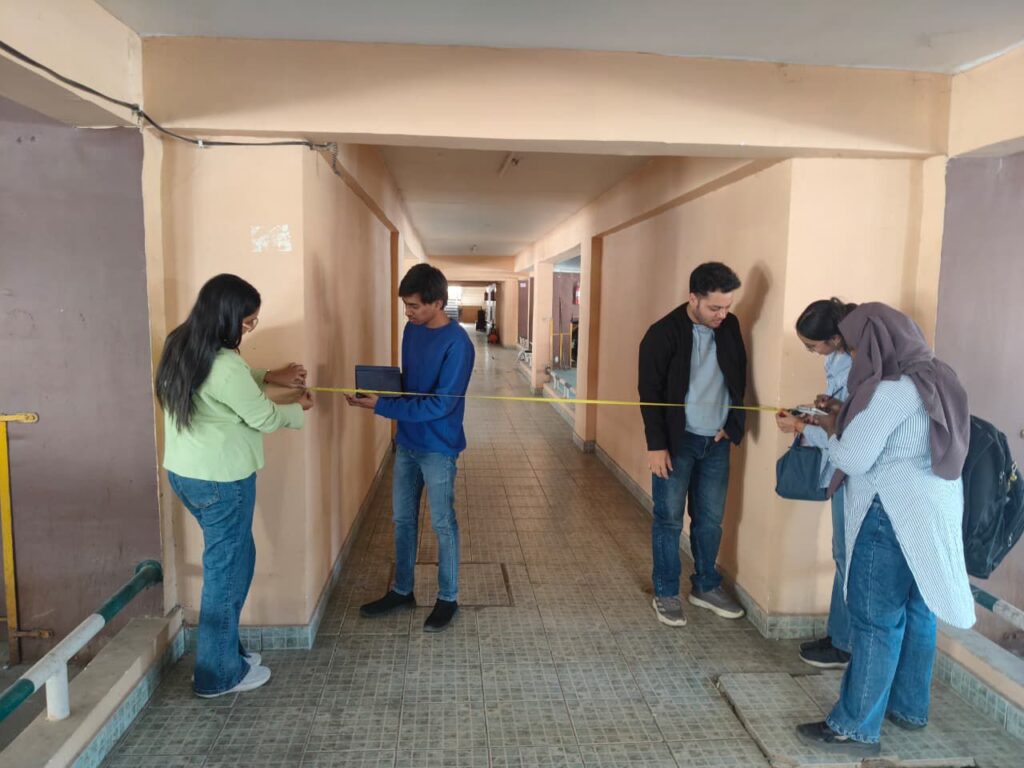
The students actively measured key spaces to understand proportions, anthropometric considerations, and usability standards in residential units and shared amenities. They documented observations through sketches, notes, and photographs to support their analytical studies. The physical walkthrough provided them with a clearer perception of scale, spatial hierarchy, and the relationship between built and unbuilt spaces—elements that are often difficult to fully grasp through drawings alone.
An important aspect of the visit was direct interaction with the site environment and observation of the ongoing living conditions within the housing complex. This hands-on exposure enabled students to critically evaluate both the strengths and practical challenges of group housing developments in an urban context.
The case study visit proved to be an enriching academic exercise, enhancing the students’ understanding of planning principles, service integration, and user-centric design approaches. Such experiential learning initiatives continue to strengthen the practical foundation of architectural education, preparing students to respond thoughtfully to real-world design challenges.