
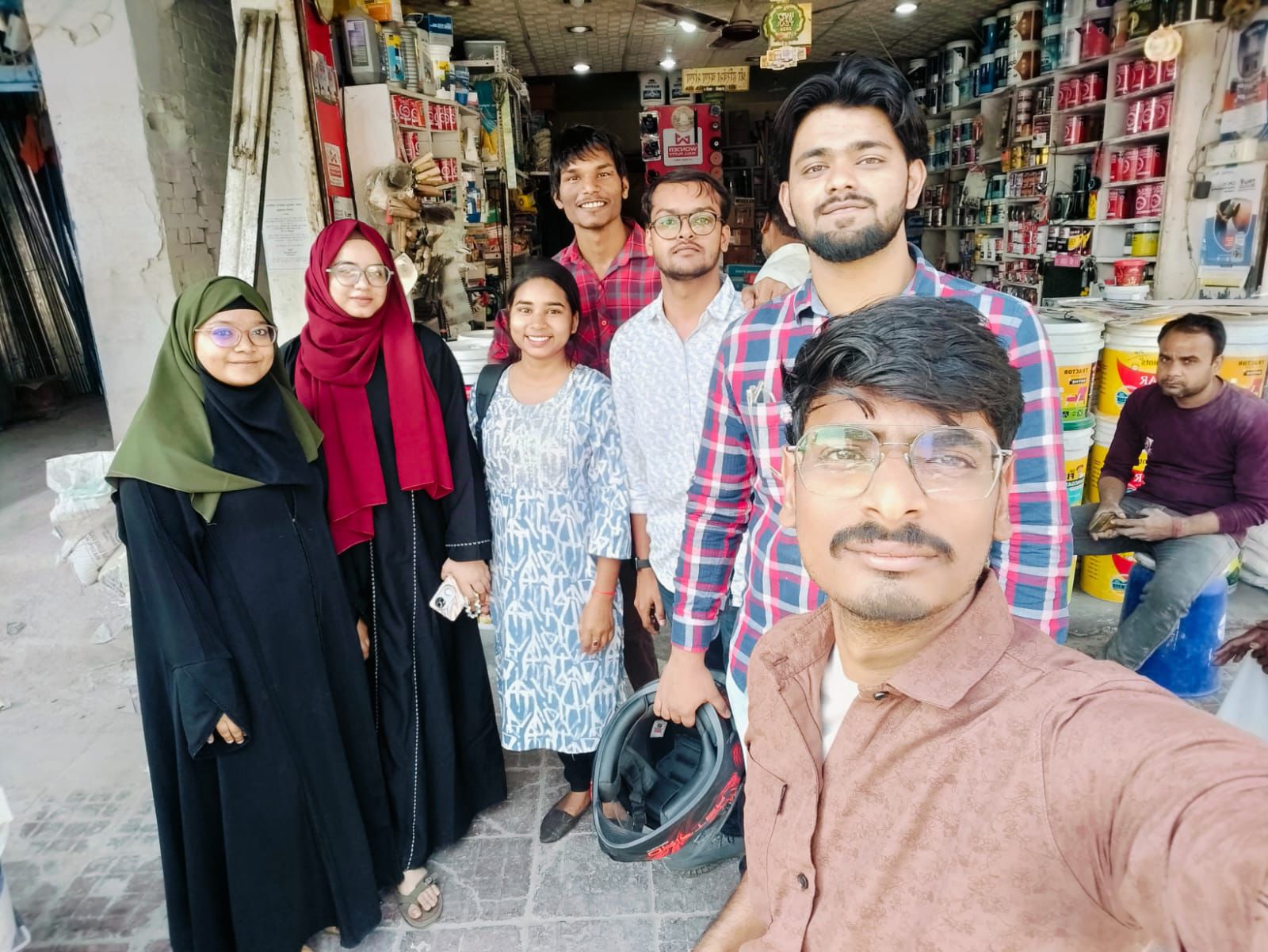
Architectural Materials Study Visit
Fourth year architecture students explore suspended ceiling materials and systems
Students of the Bachelor of Architecture, fourth year, recently undertook an educational site visit and market survey as part of their academic module focused on suspended ceiling systems and interior finishing materials. The visit was organized with the objective of providing students with practical exposure to construction materials such as gypsum boards, gypsum tiles, plaster of Paris (POP), and various interior and exterior decorative ceiling and wall systems.
During the visit, students explored local construction material markets and interacted with vendors, suppliers, and technicians who specialize in interior finishing works. This hands-on learning opportunity allowed them to observe different types of suspended ceiling systems and understand their applications in contemporary building interiors. Students were introduced to gypsum board partitions, gypsum tile ceilings, and POP-based decorative elements that are widely used for enhancing both aesthetics and functionality in interior spaces.
The market survey enabled the students to closely examine the materials used in modern ceiling and wall finishing techniques. They studied the structural framework of suspended ceilings, including the metal grid systems that support gypsum boards and tiles. Students also learned about the installation process, the required tools, fixing techniques, and the layering involved in achieving smooth and durable ceiling finishes. In addition, they gained insight into how plaster of Paris is used to create intricate decorative patterns for ceilings, cornices, and wall moldings in both residential and commercial spaces.
One of the key learning outcomes of the visit was understanding the practical aspects of material selection, including durability, cost, availability, and maintenance. Students discussed with suppliers the differences between gypsum boards and gypsum tiles, their fire-resistant and moisture-resistant properties, and their suitability for different climatic and functional conditions.
The visit also provided students with an opportunity to analyze real-life construction practices that complement the theoretical knowledge taught in the classroom. Observing ongoing installations and material samples helped them better understand construction detailing and the integration of ceiling systems with lighting, air conditioning ducts, and other building services.
Overall, the site visit and market survey proved to be a valuable learning experience for the fourth-year architecture students, helping them bridge the gap between theoretical knowledge and practical construction practices while gaining deeper insight into interior material applications.