Exploring Group Housing Architecture
Third-Year B.Arch Students Present Literature and Case Study Jury.
The third-year Bachelor of Architecture students had their internal jury, presenting an in depth exploration of group housing standards through both literature study and case study analysis. This academic exercise marked an important stage in their design journey, where theoretical understanding began to align with practical observations and critical thinking.
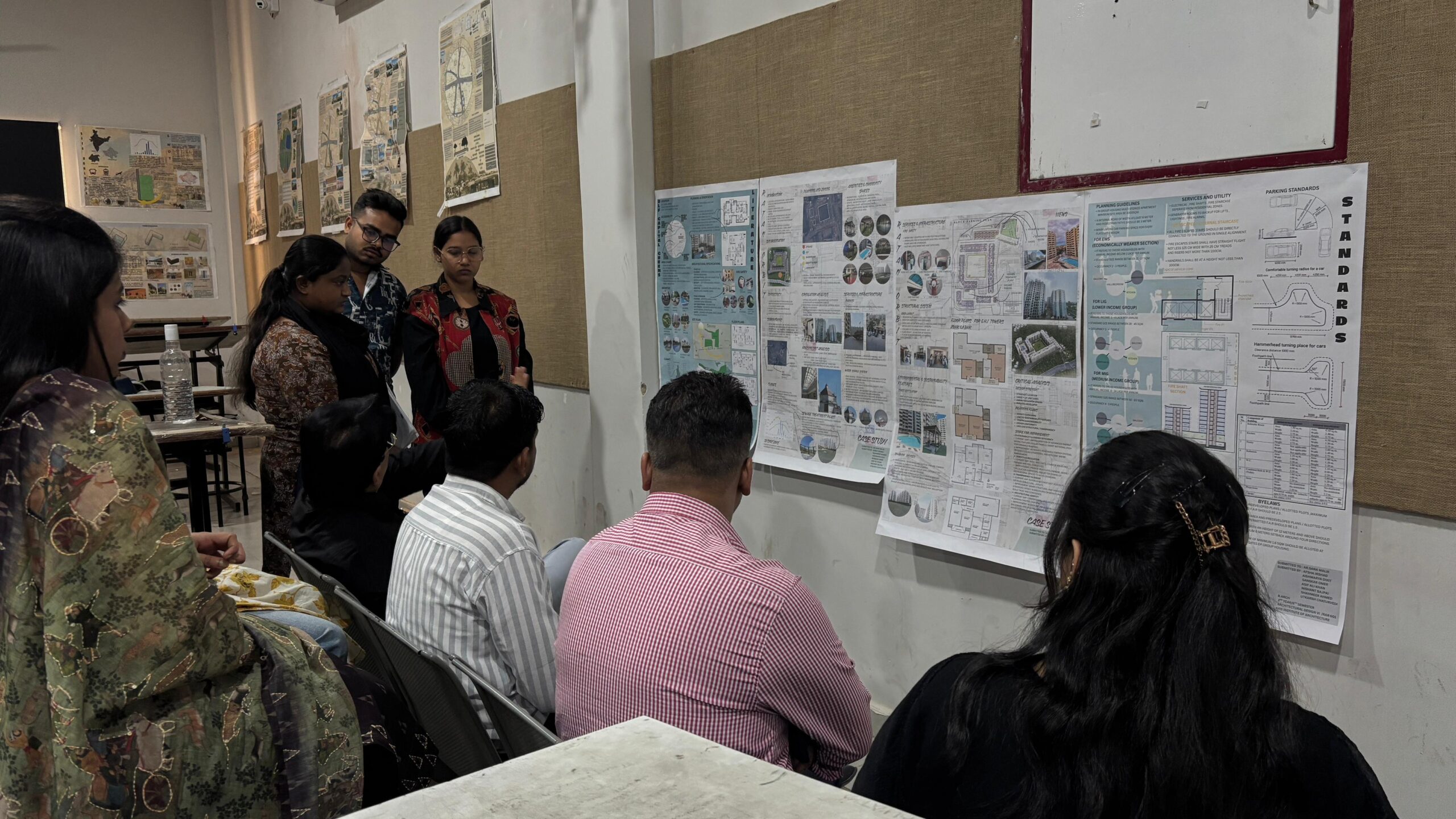
The students undertook a detailed study of established group housing principles, referring to standards, guidelines, and planning norms. Through their literature study, they developed a strong foundation in aspects such as spatial organization, zoning, circulation, density, open spaces, and community living. This theoretical base was further strengthened by their case studies, where students analyzed existing group housing projects to understand how these principles are applied in real-life scenarios.
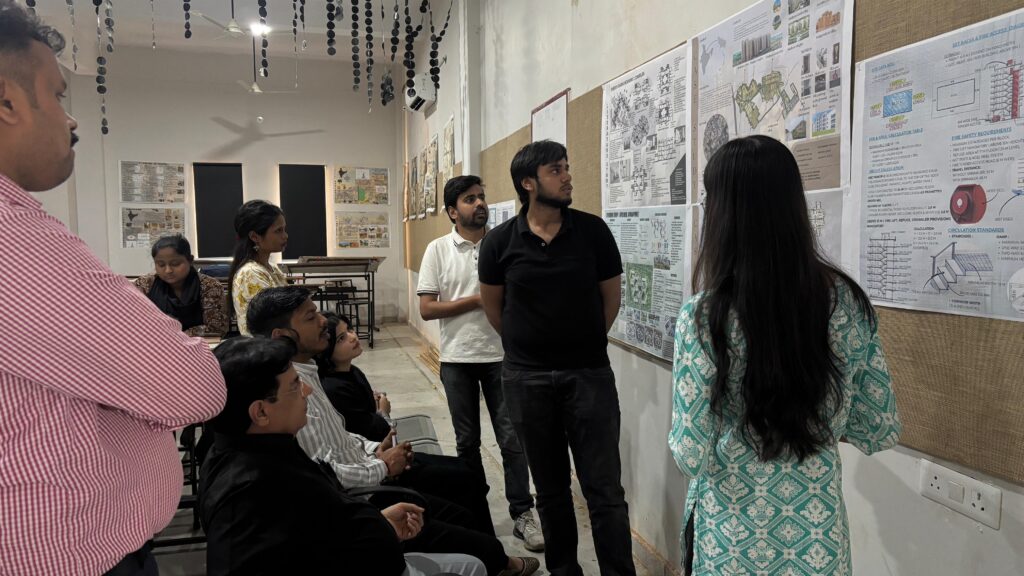
During the jury, students showcased their work through well-structured sheets, drawings, and diagrams. From site planning and unit layouts to movement patterns and shared spaces, each presentation reflected their growing architecture understanding of housing design. What stood out was their ability to identify both successful elements and shortcomings within the studied projects, highlighting their analytical and observational skills.
The internal jury also evolved into an engaging experience-sharing session, as it always does. Faculty members provided valuable insights, constructive criticism, and professional perspectives that guided students toward refining their approach. The discussions encouraged students to think deeper, question their assumptions, and improve their graphical and analytical representation.
It was particularly exciting to witness the progression of students from the very beginning of the exercise to this stage of presentation. Their journey reflected not only academic growth but also increasing confidence in expressing ideas. From initial concepts and raw observations to detailed analyses and structured presentations, the transformation was clearly visible.
Such exercises play a crucial role in architectural education, enabling students to connect theory with practice while learning from real-world examples. The jury not only helped them understand group housing in greater depth but also prepared them for future design challenges.
Overall, the session proved to be a valuable learning experience, fostering critical thinking, collaborative learning, and a deeper appreciation of housing design as a response to social and spatial needs.