
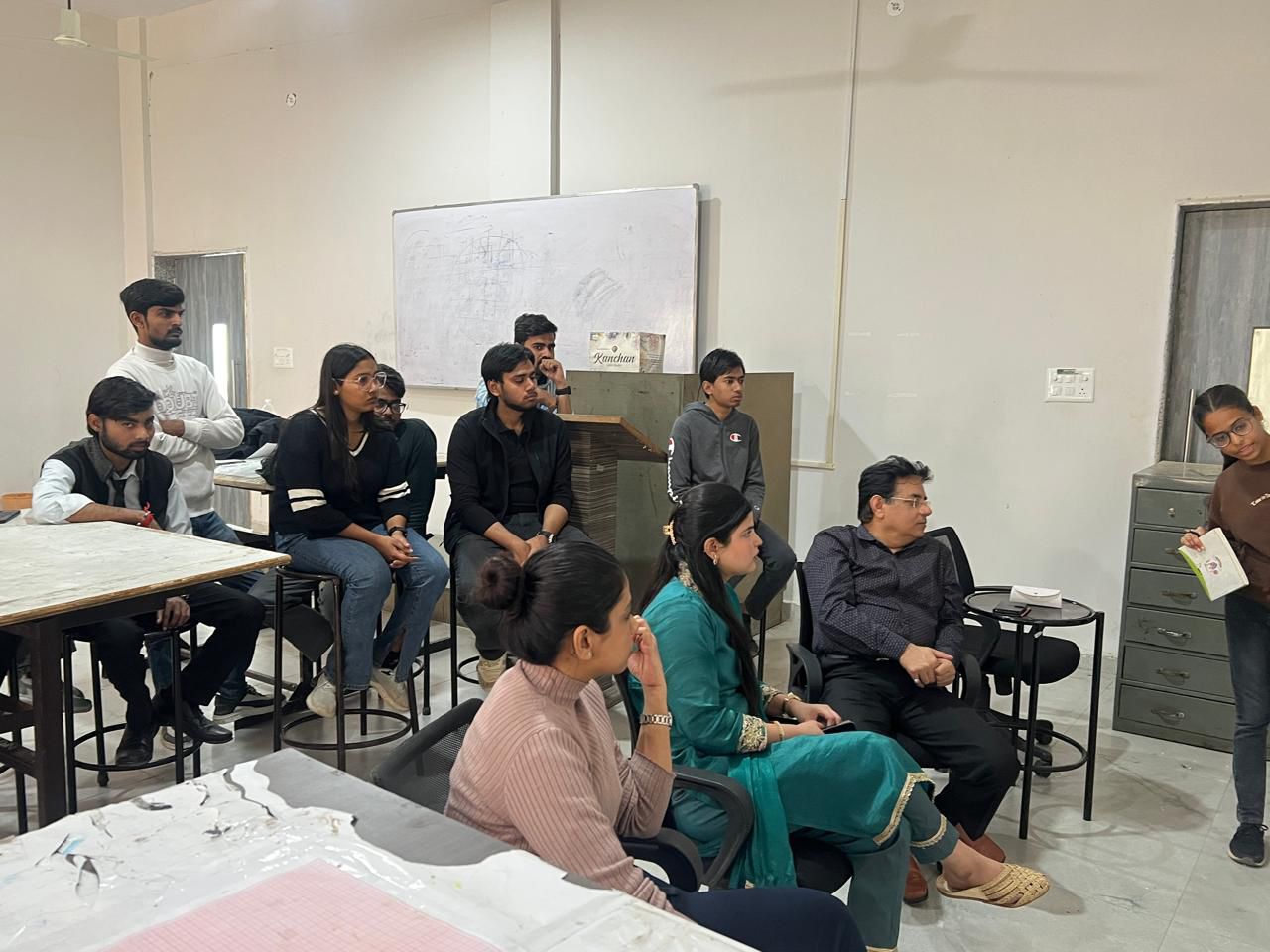
Axis Institute of Architecture Conducts Final Thesis Review
The Department of Architecture at the Axis Institute of Architecture recently conducted a comprehensive thesis concept evaluation for the final-year students of Bachelors of Architecture, marking a significant academic milestone in their professional journey. The session, attended by internal faculty members and chaired by Director Dr. Rishi Raj Kapoor, focused on the evolution of ideas, clarity of thought, and the strategic direction of each student’s thesis project.
The evaluation aimed to assess how effectively students have conceptualized their thesis proposals and how they plan to transform abstract ideas into tangible architectural solutions. As part of the process, each student presented their initial concept, the rationale behind site selection, the contextual relevance of their topic, and the broader social, environmental, and cultural concerns addressed through their design intent. The emphasis was not only on innovation but also on feasibility, sustainability, and responsiveness to contemporary architectural challenges.
Throughout the session, students articulated the journey of their concept development — from identifying a problem statement to formulating a design vision. They explained the inspiration behind their chosen themes, supported by literature studies, case analyses, and site interpretations. The presentations reflected diverse typologies, including institutional projects, urban interventions, cultural centers, community-oriented developments, and sustainable design proposals. Each thesis demonstrated a unique narrative, revealing the intellectual maturity and research depth expected at the culmination of a Bachelors of Architecture program.
A key highlight of the evaluation was the detailed discussion on design strategies. Students elaborated on zoning concepts, spatial hierarchies, circulation planning, climate-responsive approaches, structural considerations, and material exploration. They presented preliminary sketches, conceptual diagrams, and massing studies to communicate how their ideas would evolve into coherent architectural forms. Special attention was given to how each proposal integrates sustainability, energy efficiency, user experience, and contextual sensitivity.
Director Dr. Rishi Raj Kapoor provided valuable insights and constructive feedback, guiding students toward refining their design methodologies. He emphasized the importance of clarity in concept, logical progression in design development, and maintaining a strong connection between research and built form. The internal jury panel encouraged students to critically analyze their assumptions, strengthen their site responses, and develop more defined spatial narratives.
The interactive nature of the jury created an enriching academic environment where students were not merely evaluated but mentored. Questions from the panel pushed them to justify design decisions, consider alternative approaches, and think beyond conventional solutions. This exchange helped bridge the gap between theoretical understanding and professional practice.
The thesis evaluation stands as a crucial step in shaping the final direction of each project. With guidance from experienced faculty and the leadership of Director Dr. Rishi Raj Kapoor, the students of Architecture are now better equipped to advance their thesis work with clarity, confidence, and a stronger methodological foundation. The session reaffirmed the institution’s commitment to academic excellence and holistic architectural education.