
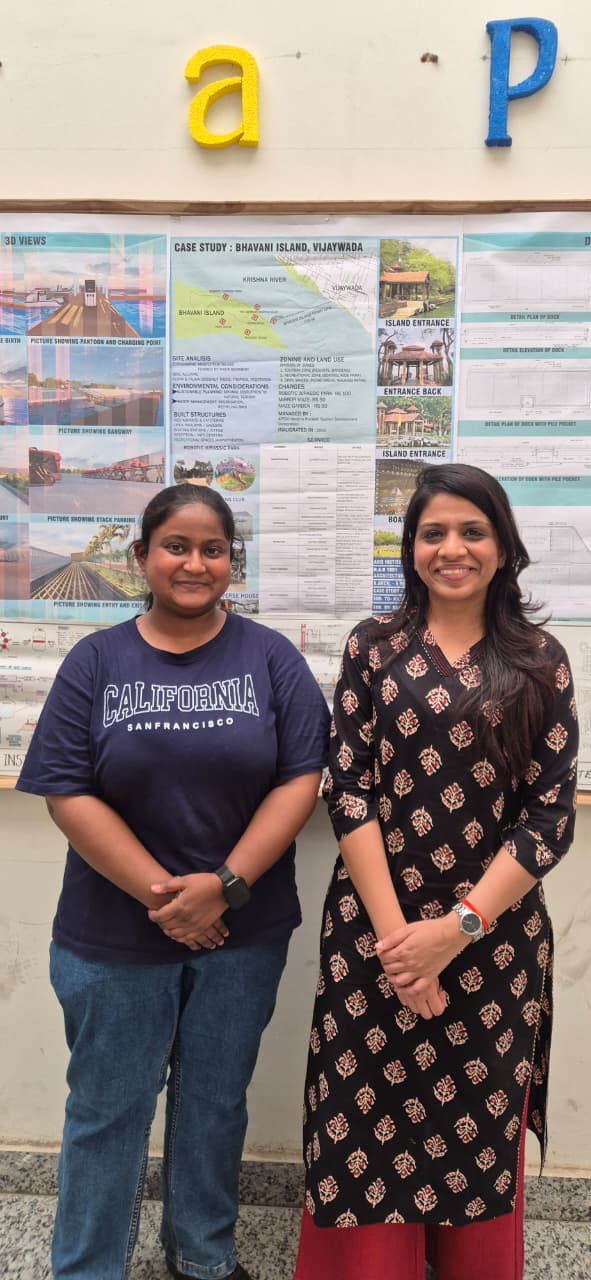
Architecture Student Publishes Research on Blending Gothic Design with Modern EraThird-year B.Arch student Afsha Irshad releases research paper under faculty guidance In a notable academic achievement, Afsha Irshad, a third-year Bachelor of Architecture student, has successfully published a research paper exploring the integration of Gothic architectural elements into contemporary design practices.
The study reflects a thoughtful investigation into how historic design principles can be adapted to meet the demands of modern architecture.
The research, titled “Incorporating Gothic Architecture into the Modernization Era,” examines the defining characteristics of Gothic architecture—such as pointed arches, ribbed vaults, flying buttresses, and vertical emphasis—and analyzes their relevance and adaptability in present-day structures.
Through case studies and conceptual analysis, the paper highlights how these classical features can be reinterpreted using modern materials, technologies, and sustainable Approaches.
Afsha Irshad conducted the research under the guidance of faculty mentor Vanshika Agarwal, who also served as the second author of the paper.
As a research faculty member, Agarwal provided academic direction and critical insights that helped shape the study into a well-structured and meaningful contribution to architectural discourse.
The paper emphasizes that while modern architecture often prioritizes minimalism and functionality, there is growing interest in reintroducing ornamental and historically rooted design elements.
By bridging Gothic aesthetics with contemporary needs, the research proposes innovative design strategies that preserve cultural identity while embracing technological advancement.
Speaking about the achievement, Afsha expressed gratitude for the support and mentorship received during the research process.
She noted that the study was inspired by a fascination with historic European cathedrals and a desire to explore their relevance in today’s urban landscape.
Faculty members have appreciated the effort, highlighting the importance of such research in expanding students’ academic and creative horizons.
The publication not only marks a significant milestone in Afsha’s academic journey but also sets an encouraging example for peers to engage in research and scholarly writing.
This accomplishment underscores the growing emphasis on research-oriented learning in architectural education, where students are encouraged to critically analyze historical styles and reinterpret them in innovative ways.